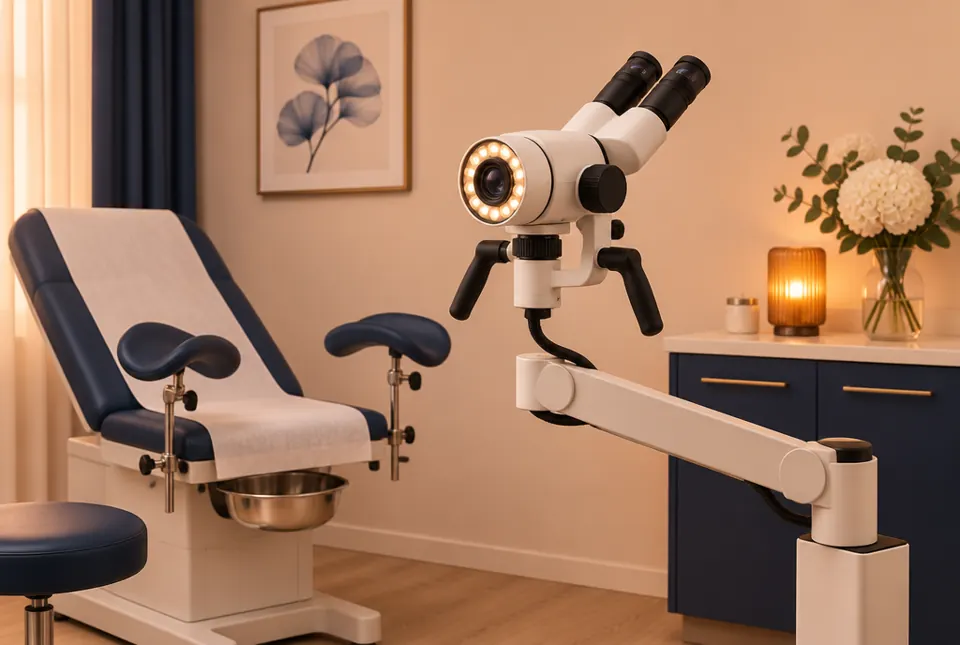

The smear test and the HPV test are screening tests that detect cervical cancer and precancerous changes early, before any symptoms appear. In Turkey, the Ministry of Health programme recommends HPV-based screening every 5 years for women aged 30–65; this screening is free at KETEM centres (Turkey's public cancer early-diagnosis centres). The test takes a few minutes and should be done outside your period, without sex or vaginal medicines in the previous 48 hours.
Key facts
What is a smear test?
A smear test (Pap smear) is a screening test in which cells taken from the cervix are examined under a microscope. The aim is to catch cervical cancer, or cell changes that could turn into cancer, while there are still no symptoms. Because cervical cancer develops slowly, regular screening allows changes to be detected and treated years in advance.
Today, screening programmes rely on the HPV test in addition to, and often ahead of, the smear test. So when people talk about "having a smear", HPV screening is often included too.
What is the difference between a smear test and an HPV DNA test?
The smear test looks for changes in the cells. The HPV DNA test looks for the high-risk HPV types that play a role in almost all cases of cervical cancer. The HPV test identifies women at risk of developing changes earlier and more sensitively.
Both tests can often be done from the same sample. If the HPV test is positive, the next step depends on the smear result and the HPV type. You can find detailed information about HPV on the HPV and genital warts page.
Who should have a smear test, and how often?
In Turkey, under the Turkish Ministry of Health's cervical cancer screening programme, HPV-based screening every 5 years is recommended for women aged 30–65. This screening is provided free of charge at KETEM (Turkey's public Cancer Early Diagnosis, Screening and Education Centres); information is also available through family doctors.
- Under 30: The national programme does not cover this age group. International guidelines (ACOG, USPSTF) generally recommend a smear (cytology) every 3 years for ages 21–29; Turkey's national programme starts at age 30. The need is assessed individually.
- Over 65: For women whose previous screening has been regular and normal, screening can usually stop.
- Vaccinated women: Women who have had the HPV vaccine should also continue screening.
- Women who have had a hysterectomy: If the womb, including the cervix, was removed for a benign reason, screening is often not needed; the decision depends on previous findings.
The screening interval depends on the type of test: with smear-only screening the interval is kept shorter, whereas for women with a negative HPV test a five-year interval can be applied.
For women who have had an abnormal result before, who have a weakened immune system or who have been treated, follow-up may be planned more frequently.
How should I prepare for a smear test?
- Plan the test for a day when you are not bleeding, preferably a few days after your period ends.
- Avoid sex in the 48 hours before the test.
- During the same period, do not use vaginal medicines, pessaries, creams, tampons or vaginal douches.
- Mention it if you have symptoms of an active vaginal infection; sometimes treating the infection first may be recommended.
A smear test can also be done during pregnancy. For pregnant women who are due for screening or have never been screened, the test can be planned at one of the first antenatal appointments. After giving birth, it is recommended to take the smear at least 6 weeks after delivery so that the cervix can recover.
This preparation allows the sample to be assessed more clearly and reduces the need for a repeat test.
How is a smear test done?
The test is done during a gynaecological examination and takes a few minutes. A speculum is inserted into the vagina so the cervix can be seen, and a sample of cells is then taken from the surface of the cervix with a small brush or spatula. The sample is sent to the laboratory.
Most women feel brief pressure or mild discomfort. There may be very light spotting after the test; this usually settles within a day. You can return to daily life straight away.
What do smear results mean?
Results are reported using an international classification system. The most common terms are:
| Term | Meaning |
|---|---|
| Normal (NILM) | No cell changes found |
| ASCUS | Borderline cell changes of uncertain significance; often interpreted according to the HPV result |
| LSIL | Low-grade change; most regress on their own |
| HSIL | High-grade change; detailed assessment with colposcopy is needed |
The great majority of abnormal results do not mean cancer. Depending on the type of result, your HPV status and your age, a repeat test, follow-up or colposcopy may be recommended.
What happens if the HPV test is positive?
HPV positivity is very common and often clears on its own within one to two years. This result does not mean that you have cancer; it simply shows that the cervix needs to be monitored more closely.
The next step is usually determined by the HPV type and the smear result. If HPV 16 or 18 is found, or if the smear result is abnormal, colposcopy is recommended. If other high-risk types are found and the smear is normal, the test is often repeated after about a year to see whether the virus has cleared. Stopping smoking during follow-up may help the immune system clear the virus. Any questions you have about a positive result can be answered at your consultation.
When should you see a doctor?
You can seek an assessment if you are due for screening, if your result reported an abnormality or HPV positivity, or if you have any of the symptoms above. What your results mean for you personally is discussed at your consultation. In Kayseri, you can also use the free screening offered at KETEM.
In Kayseri, Op. Dr. Özlem Katırcı sees patients for smear and HPV screening and the assessment of results at Özel Erciyes Hastanesi (Erciyes Private Hospital). For appointments and information, please use the contact page.
Frequently asked questions
Does a smear test hurt?
A smear usually causes brief pressure or mild discomfort and takes a few minutes. Relaxing your muscles and breathing out slowly makes it easier. If you feel significant pain, simply tell your doctor.
Are the smear test and the HPV test the same thing?
No. A smear looks for changes in the cells of the cervix, while the HPV test looks for the high-risk virus that can cause these changes. Both can often be done from the same sample.
Should single women or women who are not sexually active have a smear?
Almost all cervical cancers are linked to HPV, which is passed on through sexual contact. In women who have never had sexual intercourse, the risk is very low; the need for screening is assessed individually at your consultation.
If I have had the HPV vaccine, do I still need a smear test?
Yes. The vaccine does not protect against all high-risk HPV types. Vaccinated women are also advised to continue with screening appropriate for their age.
My smear result was abnormal. What should I do?
Most abnormal results are not cancer; they show mild cell changes that often regress on their own. Depending on the type of result and your HPV status, a repeat test, follow-up or colposcopy is planned.
This page is for general information; diagnosis and treatment require a medical consultation. Last updated: 23 November 2026