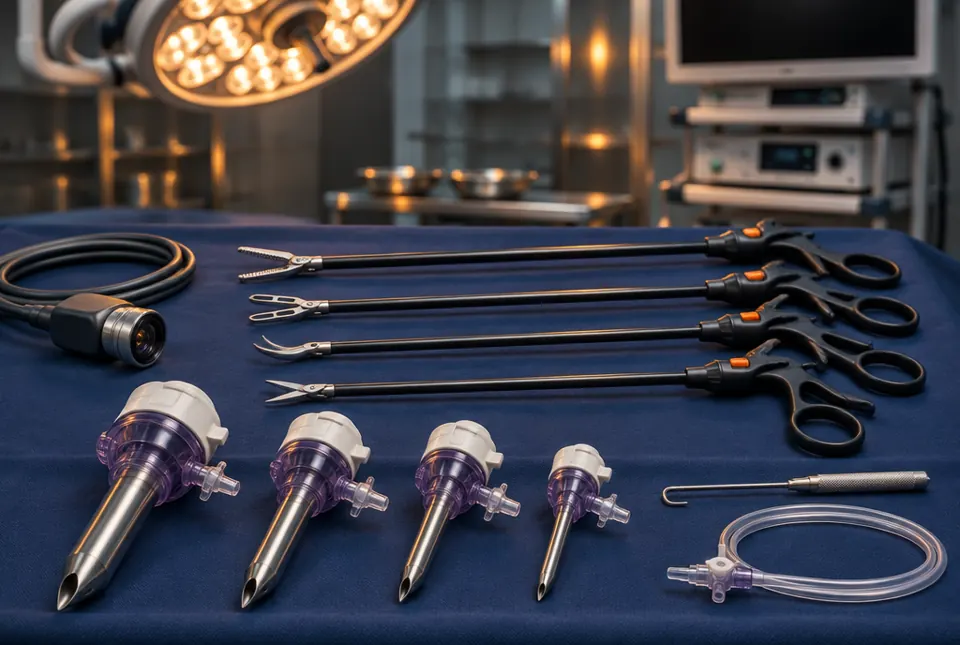
Laparoscopy is keyhole surgery performed with a camera and fine instruments through small incisions in the abdominal wall. In gynaecology it is used for conditions such as ovarian cysts, endometriosis, ectopic pregnancy, tubal ligation, fibroids and hysterectomy. Whether the method is suitable is decided after examination, based on the patient's condition and the extent of the disease.
Key facts
What is laparoscopy?
Laparoscopy is an operation performed by inserting a thin camera and special instruments through a few small incisions in the abdominal wall; it is commonly known as "keyhole surgery". It is carried out under general anaesthesia, and the organs inside the abdomen are seen magnified on a screen. In gynaecology it is used both for diagnosis and for treatment.
The camera is usually inserted through the navel, and a few more small incisions are made in the lower abdomen for the instruments. Carbon dioxide gas is introduced into the abdomen to create a working space, and most of this gas is released at the end of the operation.
What is the difference between diagnostic and operative laparoscopy?
Diagnostic laparoscopy is done to look directly inside the abdomen when pelvic pain cannot be explained by ultrasound and other tests, when endometriosis is suspected or as part of an infertility assessment. If needed, a biopsy is taken or the patency of the tubes is tested in the same session.
Operative (therapeutic) laparoscopy aims to resolve an identified problem surgically. In practice, diagnosis and treatment are often combined in the same operation; for example, when endometriosis is seen, the deposits can be removed in the same session.
When is laparoscopy used in gynaecology?
- Ovarian cysts: removing the cyst while preserving ovarian tissue. For details, see the ovarian cysts and endometriosis page.
- Endometriosis: diagnosis and treatment of endometriomas ("chocolate cysts") and endometriosis deposits inside the abdomen.
- Ectopic pregnancy: urgent treatment, in suitable cases, of a pregnancy that has implanted in the tube.
- Tubal ligation: laparoscopic tubal ligation for permanent contraception.
- Fibroids: removal of suitable fibroids growing on the outside of the womb or within its wall.
- Hysterectomy (removal of the womb): removing the womb by keyhole surgery in suitable patients.
- Ovarian torsion and adhesions: in emergency or planned situations.
What are the advantages and limitations compared with open surgery?
In suitable patients, the recognised advantages of laparoscopy over open surgery are smaller incisions, usually less pain after the operation, a shorter hospital stay and a quicker return to daily life. The risk of wound infection and hernia is also generally lower.
However, laparoscopy is not suitable for every patient or every condition. Very large masses, extensive adhesions from previous operations, masses suspected of being cancerous or some heart and lung conditions can make open surgery safer. If bleeding, adhesions or difficulty seeing occur during the operation, it may be converted to open surgery for the patient's safety; this possibility is discussed before the operation.
In some cases where the womb needs to be removed, vaginal removal of the womb is also an option comparable to keyhole surgery. Which route is chosen depends on the size of the womb, previous operations and any accompanying conditions.
How should I prepare for laparoscopy?
The decision to operate is made after examination, ultrasound and any necessary blood tests. For planned operations, an anaesthetic assessment is carried out; you should tell your doctor about the medicines you take, especially blood thinners.
- You will be asked to fast for a certain period before the operation; the anaesthesia team will tell you how long.
- If there is a chance of pregnancy, a test is done before the operation.
- It is recommended that someone close to you is with you on the day of the operation and for the first few days afterwards.
If you smoke, stopping or cutting down before the operation is beneficial for wound healing and anaesthesia. You are advised not to drive on the first day after the operation. Discussing your questions and expectations at the pre-operative consultation makes recovery more predictable.
What is recovery like after laparoscopy?
Getting up and walking within a few hours of the operation is encouraged. Mild pain at the incision sites, abdominal bloating and pain felt in the shoulder are common; these usually ease within a few days. Pain relief is used as your doctor advises.
After a diagnostic laparoscopy or tubal ligation, most women return to a desk job within a few days to a week. After more extensive operations such as fibroid removal or hysterectomy, recovery can extend to several weeks. When to return to heavy lifting, intensive sport and sexual activity is decided at the follow-up appointment, depending on the procedure performed.
The incisions are usually closed with dissolvable stitches or skin glue. Keeping the wounds clean and dry is sufficient; you will be told at discharge when it is fine to shower. If tissue removed during the operation was sent for pathology, the results are usually reviewed at the follow-up appointment within one to two weeks. Drinking plenty of fluids and staying active to prevent constipation also helps recovery.
What are the risks and possible complications?
Laparoscopy is a commonly performed method and is generally considered safe; however, as with any operation, it carries risks:
- Bleeding and bruising at the incision sites
- Infection at the incision sites or inside the abdomen
- Injury to the bowel, bladder, ureter or blood vessels (uncommon)
- Hernia at an incision site
- Blood clots in the leg veins
- Risks related to anaesthesia
- The need to convert to open surgery
When should I see a doctor?
Assessment is needed if you have persistent pelvic pain, a cyst or fibroid found on ultrasound, suspected endometriosis or are considering permanent contraception. Whether surgery is needed and which method is suitable are decided after examination; for problems inside the womb, smaller procedures such as office hysteroscopy may also be an option.
Op. Dr. Özlem Katırcı sees patients with conditions that may require gynaecological laparoscopy at Özel Erciyes Hastanesi (Erciyes Private Hospital) in Kayseri. For information and appointments, you can use the contact page.
Frequently asked questions
How many hours does laparoscopic surgery take?
The length depends on the procedure. A diagnostic laparoscopy or tubal ligation often takes less than an hour, while extensive endometriosis surgery or a hysterectomy can take several hours. Before the operation, you are given an estimated time based on the planned procedure.
Why does shoulder pain occur after laparoscopy?
The carbon dioxide gas used during the operation to see inside the abdomen can irritate the diaphragm and cause pain felt in the shoulder. This pain usually eases within a day or two. Walking helps the gas to be absorbed.
When can I go back to work after laparoscopy?
After diagnostic procedures and tubal ligation, most women return to a desk job within a few days to a week. After more extensive operations such as fibroid removal or hysterectomy, this can extend to several weeks. Wait for your doctor's advice before heavy lifting and intensive exercise.
Can laparoscopy always be done?
No. In situations such as very large masses, extensive adhesions, some heart and lung conditions or suspected cancer, open surgery may be more appropriate. During the operation, it may be necessary to convert from keyhole to open surgery for safety.
Will laparoscopy scars be visible?
Because the incisions are small, the scars usually fade over time; however, as with any operation, a scar remains. How the scar looks varies from person to person depending on skin type and healing.
This page is for general information; diagnosis and treatment require a medical consultation. Last updated: 23 November 2026