
Most ovarian cysts are functional cysts linked to the menstrual cycle and disappear on their own within a few months. An endometrioma ("chocolate cyst") is caused by endometriosis, while a dermoid cyst does not resolve by itself. The choice between monitoring and surgery depends on the type and size of the cyst, symptoms, age and the wish for pregnancy.
Key facts
What is an ovarian cyst, and is every cyst dangerous?
An ovarian cyst is a sac filled with fluid or other material that develops inside or on the surface of an ovary. In women of reproductive age, the great majority of cysts are linked to the menstrual cycle, benign and temporary. The type and size of the cyst and its appearance on ultrasound determine whether it needs monitoring or treatment.
What types of ovarian cysts are there?
Functional cysts
Follicular cysts and corpus luteum cysts, which form during ovulation, belong to this group. They usually cause no symptoms or only mild lower abdominal pain, and most disappear on their own within one to three menstrual cycles. They are followed up with a repeat ultrasound.
Endometrioma ("chocolate cyst")
This forms when tissue similar to the lining of the womb settles in the ovary. Because it fills with small amounts of blood with each period, its contents are dark brown and thick, like melted chocolate. It is part of endometriosis and is not expected to disappear on its own.
Dermoid cyst (mature cystic teratoma)
This is a benign cyst that develops from cells present since birth and may contain tissues such as fat, hair or teeth. It does not go away on its own, grows slowly and can cause the ovary to twist (torsion). For this reason, surgical removal is often recommended.
What is endometriosis, and what are its symptoms?
Endometriosis is a condition in which tissue similar to the lining of the womb is found outside the womb, for example on the ovaries, behind the womb or on the lining of the abdomen. This tissue responds to hormones and can cause inflammation and adhesions. The severity of symptoms does not always match how widespread the disease is.
- Period pain that gets progressively worse and affects daily life
- Lower abdominal pain that continues outside periods
- Pain during deep penetration
- Painful bowel movements or urination during periods
- Difficulty getting pregnant
Significant period pain should not be accepted as "normal" and should be assessed. Symptoms can begin as early as adolescence, yet the diagnosis is often made years later. If symptoms cannot be controlled with medication, or if there is also difficulty getting pregnant, a more detailed assessment is needed.
How is an ovarian cyst diagnosed?
The main diagnostic tool is ultrasound; a transvaginal scan often gives clearer information. The size of the cyst, its internal structure, wall thickness and blood flow are assessed. For cysts thought to be functional, a follow-up scan is usually done a few weeks later, at a different point in the cycle.
When endometriosis is suspected, examination findings and ultrasound provide important clues; however, small deposits on the lining of the abdomen may not be visible on ultrasound. A normal ultrasound therefore does not always rule out endometriosis, and sometimes the diagnosis can only be confirmed by laparoscopy.
If the ultrasound appearance is unclear, or if malignancy needs to be ruled out, tumour markers (for example CA-125) and an MRI may be requested. Because CA-125 can also rise with endometriosis, menstruation and inflammatory conditions, it cannot make a diagnosis on its own; results are interpreted together with the ultrasound.
Monitoring or surgery?
Most simple-looking cysts that cause no symptoms are monitored. For small endometriomas that cause no symptoms, monitoring and medication can also be options. For pain caused by endometriosis, painkillers and hormonal treatments are often the first step; although these treatments do not remove the cyst, they can noticeably reduce symptoms and slow its growth. Surgery is considered in the following situations:
- A cyst that does not disappear or that grows
- Pain that cannot be controlled with medication
- A dermoid cyst
- A large cyst with a risk of twisting
- Suspicious features on imaging
How is ovary-preserving surgery performed?
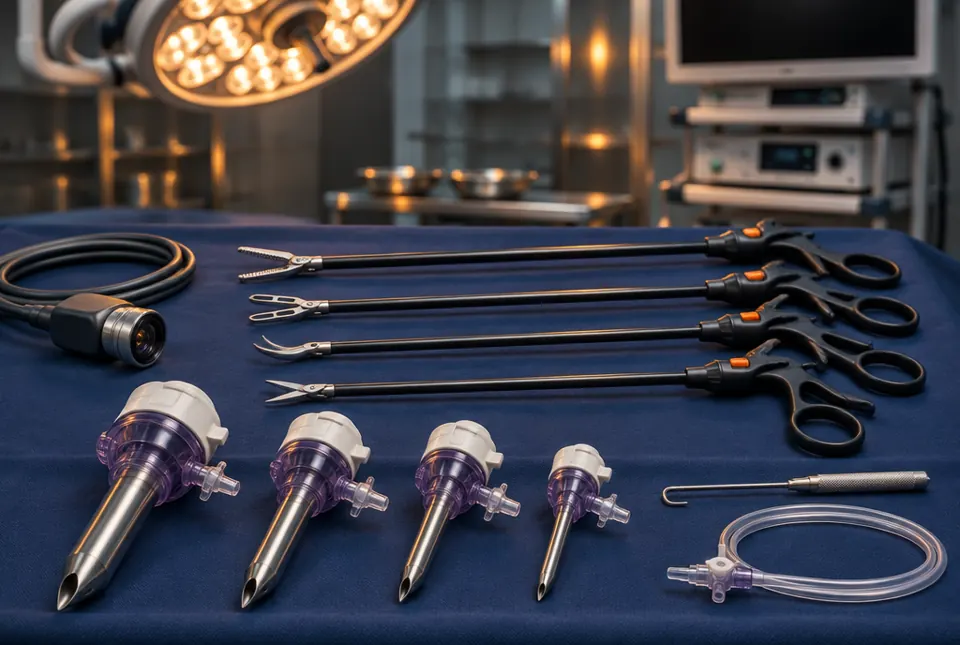
When surgery is needed, laparoscopy (keyhole surgery) is usually preferred. The aim is to remove the cyst while preserving as much healthy ovarian tissue as possible. In endometrioma surgery, the cyst wall is removed, and endometriosis deposits inside the abdomen can be treated in the same operation.
Removal of the whole ovary is generally considered after the menopause, for suspicious masses, or when the ovarian tissue cannot be preserved. The removed tissue is sent for pathology. To reduce the chance of endometriosis returning, medication or a hormonal IUD may be recommended after surgery.
Why do ovarian reserve (AMH) and plans for pregnancy matter?
AMH is a blood test that gives an idea of the egg reserve in the ovaries. An endometrioma can reduce ovarian reserve, both through the cyst itself and through its surgery. Measuring AMH before surgery helps to anticipate the possible effect. So, for women who wish to become pregnant, the decision takes into account the AMH level, age, the size of the cyst, symptoms and the condition of both ovaries.
In some cases it may be better to plan pregnancy or IVF treatment first; in others, surgery first. If you are having difficulty getting pregnant, an infertility evaluation is part of this decision-making process.
What are the risks of surgery, and when should you seek advice?
As with any operation, there are risks of bleeding, infection, injury to nearby organs, adhesions and anaesthesia. With endometrioma surgery, a reduction in ovarian reserve and the possibility of the cyst returning over time are also discussed. Regular ultrasound check-ups after surgery allow a new cyst to be noticed early.
If you have worsening period pain, pain during sex, a cyst found on ultrasound or difficulty getting pregnant, an assessment is recommended. Op. Dr. Özlem Katırcı sees patients with ovarian cysts and endometriosis at Özel Erciyes Hastanesi (Erciyes Private Hospital) in Kayseri; for more information, please use the contact page.
Frequently asked questions
Do ovarian cysts go away on their own?
Most functional cysts related to ovulation disappear on their own within one to three menstrual cycles. Endometriomas and dermoid cysts, however, usually do not resolve by themselves. The type of cyst is assessed with ultrasound, and a follow-up scan is arranged if needed.
Does an endometrioma stop you getting pregnant?
Endometriosis can make it harder to conceive; however, many women with an endometrioma become pregnant naturally or with treatment. The size of the cyst, ovarian reserve, age and the condition of the fallopian tubes are assessed together.
Does endometrioma surgery reduce ovarian reserve?
Because some healthy ovarian tissue may also be affected during surgery, ovarian reserve can decrease. For this reason, especially in women who wish to become pregnant, the decision to operate takes into account the AMH level, the size of the cyst and the symptoms. Unnecessary or repeated operations are avoided.
When does an ovarian cyst need surgery?
Cysts that do not disappear or that grow, cause severe pain, dermoid cysts, large cysts with a risk of twisting, and cysts with suspicious features on imaging are assessed for surgery. Sudden, severe lower abdominal pain needs urgent assessment.
Can endometriosis be cured completely?
Endometriosis is a long-term condition; with treatment, symptoms can often be brought under good control. Because it can return after surgery, long-term follow-up and, if needed, medication are recommended. Symptoms usually ease with the menopause.
This page is for general information; diagnosis and treatment require a medical consultation. Last updated: 23 November 2026