Colposcopy is an examination in which the cervix is looked at in detail with a special magnifying instrument; it usually takes 10–20 minutes. It is mostly done after an abnormal smear result or a positive high-risk HPV test. If a suspicious area is seen, a small biopsy is taken and follow-up or treatment is planned according to the result.
Key facts
What is colposcopy?
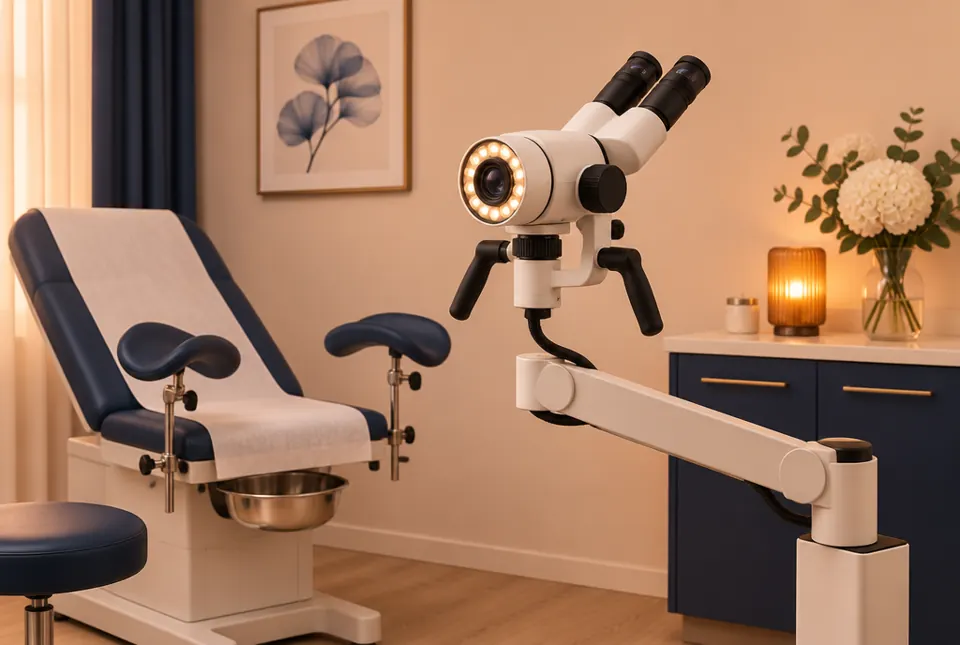
Colposcopy is an examination in which the neck of the womb (cervix) is looked at in detail using a lit magnifying instrument called a colposcope. The instrument does not enter the body; it stays outside the vagina and shows the cervix under magnification. The aim is to see where on the cervix a finding from a smear or HPV test comes from and, if needed, to take a biopsy from the right place.
Colposcopy is a diagnostic method, not a treatment. However, thanks to this examination, precancerous changes can be detected years before they could turn into cancer.
Who needs colposcopy, and when?
Colposcopy is most often recommended in the following situations:
- A smear result showing abnormal cell findings such as ASCUS, LSIL or HSIL
- A positive HPV test, particularly for HPV 16 or 18
- Other high-risk HPV types persisting on repeated tests
- Unexplained findings such as a suspicious-looking cervix on examination or bleeding after sex
- Follow-up of previously treated cell changes
Being referred for colposcopy does not mean a diagnosis of cancer. The examination is done to find out whether a finding on a screening test really corresponds to a significant change; in a large proportion of women examined, either no change is found or only mild changes that need follow-up. If you have just received your HPV result, it can help to bring your questions to your consultation.
You can find what screening results mean on the smear test page, and information about HPV types on the HPV and genital warts page.
How should I prepare for colposcopy?
It is preferable to schedule the examination outside your period. Avoiding sex, tampons, vaginal medicines and vaginal douching for one to two days beforehand helps the cervix to be seen more clearly.
It is important to mention in advance if you could be pregnant, if you have a tendency to bleed or if you take blood-thinning medication. Because you can return to daily life straight after the procedure, most women can come and go on their own.
How is colposcopy performed?
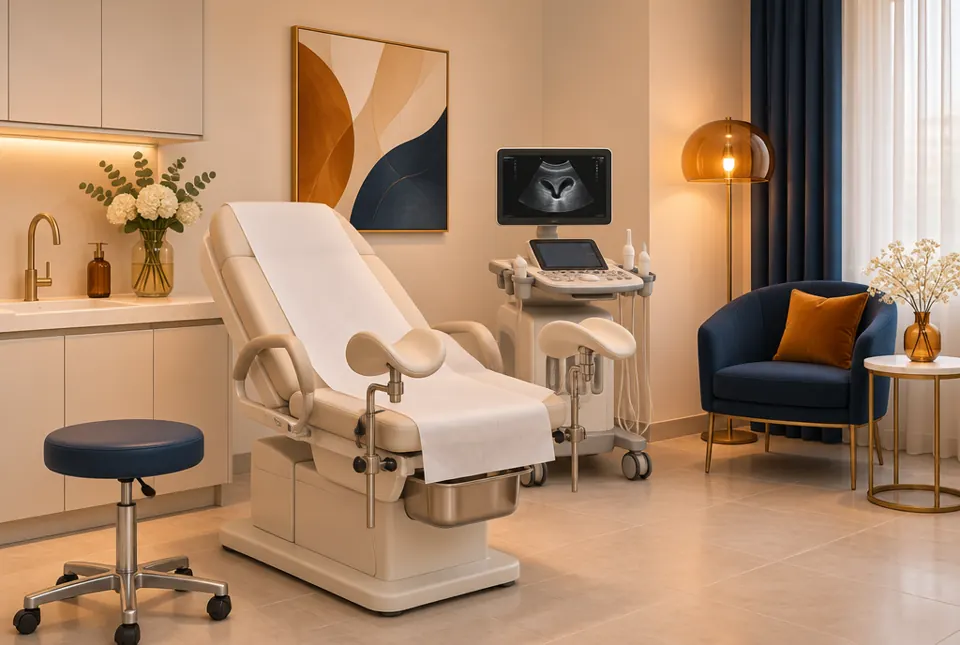
The examination begins on the gynaecological examination couch, much like having a smear taken. After a speculum is inserted, dilute acetic acid (a solution similar to vinegar) and, if needed, an iodine solution are applied to the cervix. These solutions make normal and abnormal tissue take on different colours; you may feel a slight coolness or stinging.
The doctor examines the cervix under magnification with the colposcope. If a suspicious area is seen, a small piece of tissue (biopsy) is taken from it. In some cases a sample may also be taken from inside the cervical canal. A biopsy can cause a brief cramp or stinging sensation; a special solution may be applied to the area to stop bleeding. The whole procedure usually takes 10–20 minutes.
What should I watch for after colposcopy?
If no biopsy was taken, there are usually no restrictions. If a biopsy was taken, light bleeding, spotting or dark-coloured discharge may occur for a few days; this discharge can come from the solution used and is expected.
The pathology result is usually ready within one to two weeks. When it is available, the findings and the next step are discussed with you separately; do not hesitate to share any anxiety or questions you have while waiting for the result.
After a biopsy, it is recommended to avoid sex, tampons and vaginal douching for a few days to about a week to allow the tissue to heal. As with any procedure, infection or more bleeding than expected can rarely occur.
What do biopsy results mean? CIN 1, CIN 2 and CIN 3
In biopsy results, cell changes in the cervix are usually graded as CIN (cervical intraepithelial neoplasia). These changes are not cancer; they describe precancerous stages.
| Result | Meaning | General approach |
|---|---|---|
| CIN 1 | Mild cell change | Most regress on their own; follow-up is usually recommended |
| CIN 2 | Moderate change | Treatment or close follow-up depending on age, wish for pregnancy and findings |
| CIN 3 | Severe change | Treatment is usually recommended |
When treatment is needed, the most commonly used methods are LEEP (removing the abnormal tissue with an electrical wire loop) and conisation. In these procedures, the part of the cervix containing the changes is removed in a cone shape and sent for pathology. After the procedure, follow-up continues with regular check-ups and HPV tests. Which method is suitable depends on your age, pregnancy plans and the findings.
LEEP and conisation are mostly day-case procedures. As with any procedure, they carry risks such as bleeding, infection and, rarely, narrowing of the cervix. Because a slight increase in the risk of preterm birth in later pregnancies has been reported, depending on the amount of tissue removed, this is taken into account separately in the treatment decision for women planning a future pregnancy. When follow-up tests after treatment remain normal, check-ups gradually return to the routine screening interval.
Can colposcopy be done during pregnancy?
If there is an abnormal smear or HPV result during pregnancy, colposcopy can still be done. Because the cervix is more vascular and softer in pregnancy, the assessment requires experience. A biopsy is taken only if there is a clear suspicion; no sample is taken from inside the cervical canal.
Because precancerous cell changes are not expected to progress rapidly during pregnancy, treatment is usually postponed until after the birth. Your pregnancy care and colposcopy check-ups are planned together.
When should you see a doctor?
If your smear result reported an abnormality, if you tested positive for HPV 16 or 18, or if you have an unexplained symptom such as bleeding after sex, an examination is recommended. The follow-up and treatment plan is decided individually for each woman.
In Kayseri, Op. Dr. Özlem Katırcı performs colposcopy, and biopsy where needed, at Özel Erciyes Hastanesi (Erciyes Private Hospital). For appointments and information, please use the contact page.
Frequently asked questions
Does colposcopy hurt?
Colposcopy itself is an examination similar to having a smear taken, and most women feel only mild discomfort. If a biopsy is taken, there may be a brief cramp or stinging sensation. If you feel anxious, it helps to talk about this with your doctor before the procedure.
I have been referred for colposcopy. Does this mean I have cancer?
No. Being referred for colposcopy means there is a finding on the cervix that needs a closer look. Most of the changes found are precancerous or mild changes that can regress on their own.
When will the biopsy result be ready?
Pathology results are usually ready within one to two weeks; the time may vary between centres. When the result is available, your doctor will discuss the findings and the next step with you.
When can I have sex after colposcopy?
If no biopsy was taken, there are usually no restrictions. If a biopsy was taken, it is recommended to avoid sex, tampons and vaginal douching for a few days to about a week to allow the tissue to heal; your doctor will advise on the exact time depending on the procedure.
Can colposcopy be done during pregnancy?
Yes, colposcopy can also be done during pregnancy. A biopsy is taken only if there is a clear suspicion, and treatment of cell changes is usually postponed until after the birth.
This page is for general information; diagnosis and treatment require a medical consultation. Last updated: 23 November 2026