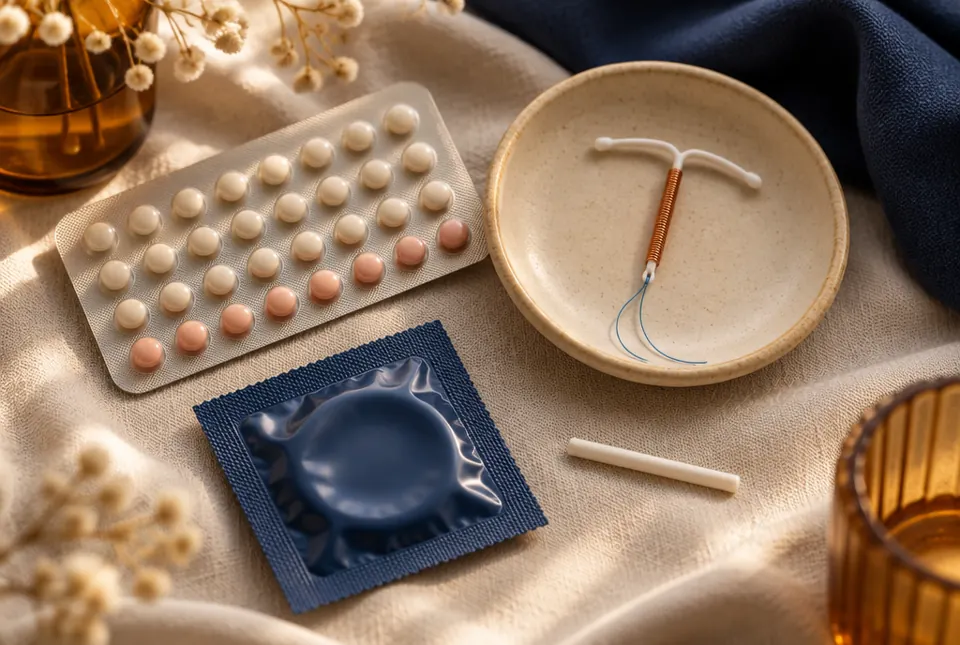

Emergency contraception is used to reduce the risk of pregnancy after unprotected sex or a contraceptive failure such as a split condom or a missed pill. There are two types of morning-after pill: one is taken within 72 hours at the latest and the other within 120 hours, and the sooner it is taken, the more effective it is. A copper IUD fitted within 5 days is regarded in guidelines as the most effective emergency method and then provides ongoing contraception.
Key facts
What is emergency contraception?
Emergency contraception refers to methods used to reduce the risk of pregnancy after unprotected sex or after the contraceptive method used has failed. The pills commonly known as the "morning-after pill" and the copper IUD (coil) are used for this purpose. The sooner you seek it, the more effective it is.
Emergency contraception does not end an existing pregnancy. Its purpose is to prevent a pregnancy from starting.
When is it needed?
If pregnancy is not wanted and one of the following has happened, emergency contraception can be considered:
- Sex without any method of contraception
- A condom splitting, slipping off or being used incorrectly
- Missed or late contraceptive pills
- A three-monthly injection not given on time
- A ring or patch coming out or off, or being changed late
- Noticing that an IUD has come out
- A mistake with the withdrawal method
Whether emergency contraception is needed after a missed pill depends on the type of pill, how many pills were missed and which week of the cycle you are in. If you are unsure, it is advisable to ask your doctor or pharmacist.
Unprotected sex can carry a risk of sexually transmitted infections as well as pregnancy. If you have had sex with a new partner or a partner whose status is unknown, testing for infections at the appropriate time should also be discussed. After sex that took place without your consent, it is important to go to a healthcare facility without delay.
What is assessed at the consultation?
When you see a doctor, you will be asked when the unprotected sex took place, the date of your last period, how regular your cycle is, what medicines you take and whether you are breastfeeding. A pregnancy test is done if needed. Based on this information, whether the morning-after pill or the copper IUD is suitable is assessed together.
What types of morning-after pill are there?
There are two different types of morning-after pill. The first type is taken within 72 hours (3 days) of unprotected sex at the latest. The second type can be taken within 120 hours (5 days) at the latest. With both types, the sooner the pill is taken, the more effective it is; try not to leave it until the last hours.
The morning-after pill is obtained from a pharmacy. Ask a doctor or pharmacist which product is suitable for you and how to use it. It is important to mention any medicines you take and whether you are breastfeeding at this point.
How does the morning-after pill work?
The morning-after pill works mainly by delaying ovulation. This means sperm lose their ability to fertilise before they can meet an egg. If ovulation has already happened, the pill's effect may be markedly reduced; this means the pill cannot prevent pregnancy in every situation.
The morning-after pill is not a medicine that causes miscarriage. It does not end a pregnancy that has implanted in the womb. If there was an unnoticed pregnancy when the pill was taken, there is no evidence that the pill harms the baby.
Can the copper IUD be used as emergency contraception?
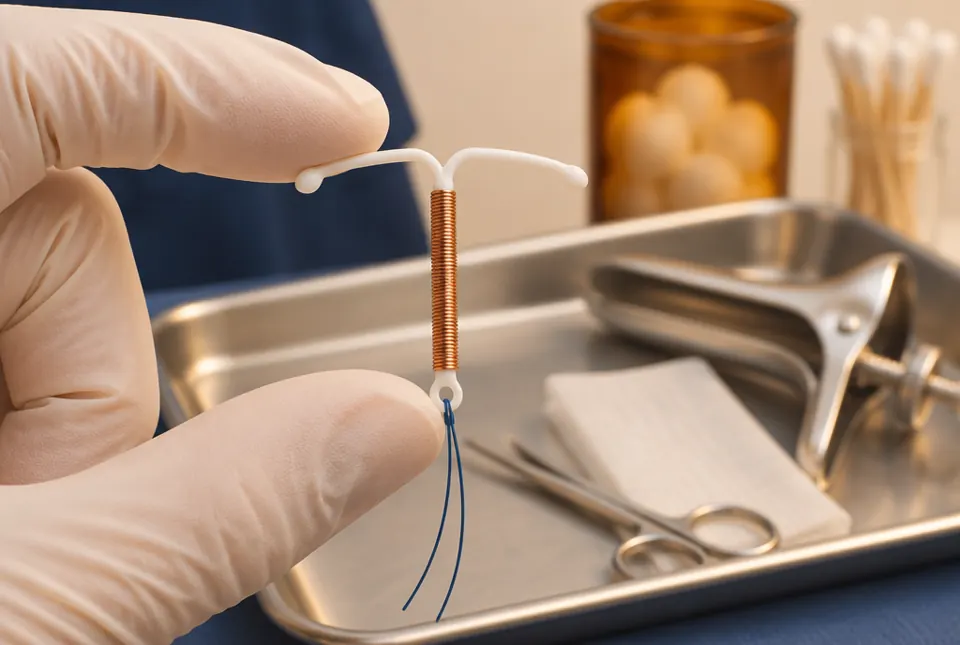
Yes. A copper IUD fitted within 5 days of unprotected sex is regarded in guidelines as the most effective method of emergency contraception. Copper prevents sperm movement and fertilisation, and it largely keeps its effect even if ovulation has already happened. In some situations, the time limit can also be calculated from the estimated day of ovulation.
Another feature of the copper IUD is that, once fitted, it provides ongoing contraception for years. If you wish, the IUD can be removed after your next period. Because fitting an IUD requires an examination and a short procedure, it may not be as quickly available as the pill; for this reason, taking a pill while waiting may also be discussed. Detailed information about fitting and possible risks is on the IUD and hormonal IUD page.
What can reduce its effectiveness?
- Time: The longer the time since sex, the lower the effectiveness, especially with the 72-hour type.
- Body weight: In women with a higher body weight, morning-after pills may be less effective. In this case, ask a doctor or pharmacist which option is suitable; the effectiveness of the copper IUD is not affected by weight.
- Some medicines: Some medicines and herbal products that affect liver enzymes can reduce the pill's effectiveness. Always mention the medicines you take regularly.
- Further unprotected sex in the same cycle: The pill only works for sex that happened before it was taken; it does not protect against later sex.
What are the side effects?
The morning-after pill is generally well tolerated. Side effects are usually mild and short-lived:
- Nausea, and rarely vomiting
- Headache, abdominal pain, breast tenderness
- The next period coming a few days early or late
- Spotting or light bleeding on unexpected days
If you vomit within about 3 hours of taking the pill, it may not have been fully absorbed and you may need another dose. In this case, contact your doctor or pharmacist without delay.
For women who are breastfeeding, the advice differs according to the type of pill: with one type, a short break from breastfeeding is recommended, while with the other this is generally not needed. The copper IUD can also be used while breastfeeding.
What should I watch for afterwards?
The morning-after pill is not a regular method of contraception; it is not as effective as regular methods, and frequent use can disturb your cycle. After emergency contraception, switching to a regular method is recommended. A comparison of the pill, IUD, implant and other options is on the contraception methods page.
When to start a hormonal method depends on the type of morning-after pill used; starting a hormonal method straight after one of the types can reduce the pill's effect. For this reason, ask your doctor when to start, and use condoms until the new method becomes effective.
If you have unprotected sex again in the same cycle after taking the pill, the risk of pregnancy continues; the pill only works for sex that happened before it was taken. If a copper IUD has been fitted, a check-up is done a few weeks later to confirm it is in place.
Op. Dr. Özlem Katırcı sees patients for assessment after emergency contraception and switching to a regular method at Özel Erciyes Hastanesi (Erciyes Private Hospital) in Kayseri; whether a copper IUD is suitable for you is assessed at the consultation. For appointments and information, please use the contact page.
Frequently asked questions
Does the morning-after pill cause a miscarriage?
No. The morning-after pill works mainly by delaying ovulation and acts before fertilisation. It does not end an established pregnancy, so it is not the same as medicines used to end a pregnancy.
How many hours after sex should the morning-after pill be taken?
One type is taken within 72 hours of unprotected sex at the latest, and the other within 120 hours at the latest. With both types, it is recommended to take it as soon as possible. You can ask your doctor or pharmacist which product is suitable for you.
When will my period come after the morning-after pill?
In most women, the period comes at the expected time or a few days earlier or later. If your period is more than 7 days later than expected, is noticeably lighter than usual, or you have signs of pregnancy, a pregnancy test is recommended.
What if I vomit after taking the morning-after pill?
If you vomit within about 3 hours of taking the pill, it may not have been fully absorbed and you may need another dose. In this case, contact your doctor or pharmacist without delay; they will assess whether it needs to be taken again.
Can I use emergency contraception while breastfeeding?
Women who are breastfeeding can also use emergency contraception, but the advice differs according to the type of pill. With one type, a short break from breastfeeding is recommended, while with the other this is generally not needed. The copper IUD can also be used while breastfeeding.
Can the morning-after pill be used as regular contraception?
No. The morning-after pill is not as effective as regular methods, and frequent use can disturb your cycle. It is intended for emergencies; for ongoing protection, switching to a method such as the pill, an IUD or the implant is recommended.
This page is for general information; diagnosis and treatment require a medical consultation. Last updated: 23 November 2026