Office hysteroscopy is a procedure in which the inside of the womb is examined with a thin camera in an outpatient setting, without general anaesthesia. It is used to assess abnormal bleeding, polyps, adhesions inside the womb, recurrent miscarriage and infertility. Most patients tolerate it well; whether it is suitable is decided after an examination.
Key facts
What is office hysteroscopy?
Office hysteroscopy is a procedure in which the inside of the womb is viewed directly with a camera a few millimetres in diameter, passed through the cervix. It does not require general anaesthesia, is carried out in an outpatient setting and is usually completed within 10–20 minutes. After a short rest, the patient can go home the same day.
Ultrasound shows the inside of the womb indirectly; with hysteroscopy, the cavity of the womb and the openings of the fallopian tubes into the womb are seen directly. This means a suspicious finding can be clarified and, in suitable cases, treated in the same session.
When is office hysteroscopy done?
Office hysteroscopy is used both for diagnosis and for minor procedures. The most common reasons are:
- Abnormal uterine bleeding: bleeding between periods, long or very heavy periods, bleeding after menopause.
- Endometrial polyps: confirming polyps suspected on ultrasound and removing those of a suitable size.
- Adhesions inside the womb: in women who have had a D&C or uterine surgery and notice lighter periods or difficulty getting pregnant.
- Recurrent miscarriage: investigating structural differences such as a septum (a dividing wall) inside the womb.
- Infertility assessment: examining the cavity of the womb before IVF or in unexplained infertility. See also the infertility evaluation page.
- Lost IUD threads: removing an IUD whose threads cannot be seen and whose position has been confirmed by ultrasound.
For irregular periods, hysteroscopy is not always the first step; hormone assessment and ultrasound are done first. For details, see the irregular periods and PCOS page.
What assessment is done before the procedure?
First, your symptoms and previous operations are discussed, and a gynaecological examination and ultrasound are carried out. If there is a chance of pregnancy, a test is requested; if there is an active vaginal or pelvic infection, the procedure is postponed until after treatment.
The procedure is usually planned for the first days after your period has finished, because the lining of the womb is thin at this time and the view is clearer. Your doctor may recommend mild pain relief to take some time before the procedure. Fasting is usually not necessary.
The procedure is not done, or is postponed, if there is pregnancy, an active pelvic infection or very heavy bleeding. In women who have had cervical surgery or have never given birth, the cervix may be narrow; the procedure can still be attempted, but if it cannot be completed it is planned under anaesthesia. Talking through any worries beforehand helps you know what to expect.
How is office hysteroscopy performed?
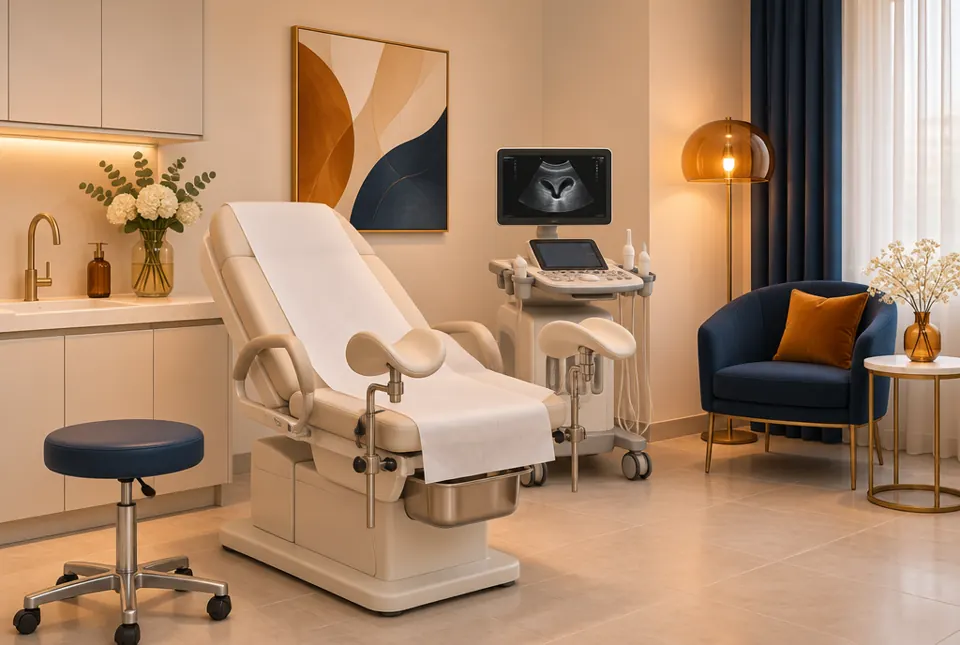
You lie on the gynaecological examination couch. At many centres, the camera is passed directly through the vagina and cervix without using a speculum. Saline is introduced to open up the cavity of the womb and give a clearer view.
Once the camera reaches the inside of the womb, the lining, any polyps or adhesions and the openings of the tubes are examined. If needed, a biopsy is taken, or a small polyp or lost IUD is removed, using fine scissors and graspers passed through the camera's channel.
During the procedure you may feel cramping similar to period pain, a brief sense of pressure or, rarely, light-headedness. Most patients tolerate the procedure well; however, if the discomfort becomes significant, the procedure is stopped. In that case it can be rescheduled to be done in the operating theatre under anaesthesia.
What is the difference between office hysteroscopy and hysteroscopy in the operating theatre?
| Feature | Office hysteroscopy | Hysteroscopy in the operating theatre |
|---|---|---|
| Anaesthesia | Usually not needed | General or regional anaesthesia |
| Setting | Outpatient clinic | Operating theatre |
| Camera diameter | Thinner | Thicker, allows more instruments |
| Suitable procedures | Diagnosis, biopsy, small polyps, thin adhesions, IUD removal | Large polyps, fibroids growing into the womb, extensive adhesions, septum |
| Preparation | Fasting usually not needed | Fasting and an anaesthetic assessment are required |
Which method is suitable depends on the size and location of the finding and the patient's condition. For fibroids growing into the cavity of the womb, you can find detailed information on the fibroid treatment page.
What should I watch for after office hysteroscopy?
For a few days after the procedure there may be mild cramping and light bleeding or spotting. Most women return to their daily activities the same day or the next day. Unless your doctor advises otherwise, sexual intercourse, tampon use and swimming are usually postponed for a few days while bleeding continues.
If a biopsy was taken, the pathology result is usually available within one to two weeks and is reviewed at the follow-up appointment.
The findings seen during the procedure are often shared with you the same day. If a polyp was removed, changes in your periods are followed over a few cycles. If the procedure was done as part of an infertility assessment, the findings are added to the treatment plan; if adhesions inside the womb were released, your doctor may recommend additional treatment or a follow-up hysteroscopy to prevent them from re-forming.
What are the risks and possible complications?
Office hysteroscopy has a low complication rate; however, as with any medical procedure, there are some risks:
- Cramping, nausea or light-headedness due to a vasovagal reaction during the procedure
- Infection (rare)
- Prolonged or increased bleeding
- Perforation of the wall of the womb (uncommon)
- The procedure not being completed because the cervix is narrow
When should I see a doctor?
If you have bleeding between periods or after menopause, a suspected polyp on ultrasound, a marked reduction in your periods after a D&C, recurrent miscarriage or difficulty getting pregnant, the inside of the womb may need to be assessed. Whether office hysteroscopy is suitable for you is decided after an examination and ultrasound.
Op. Dr. Özlem Katırcı sees patients for office hysteroscopy and assessment of endometrial polyps at Özel Erciyes Hastanesi (Erciyes Private Hospital) in Kayseri. For appointments and information, you can use the contact page.
Frequently asked questions
Does office hysteroscopy hurt?
Most patients tolerate the procedure well; cramping similar to period pain or brief discomfort may be felt. Mild pain relief may be recommended beforehand. If the discomfort becomes significant, the procedure is stopped and, if needed, planned in the operating theatre under anaesthesia.
On which day of the cycle is office hysteroscopy done?
Because the lining of the womb is thinnest then, it is usually planned in the first days after your period has finished, before ovulation. There should be no chance of pregnancy. The exact timing is decided at the examination.
Can I go back to work after office hysteroscopy?
Most women return to their daily activities the same day or the next day. There may be mild cramping and spotting for a few days. If you have a fever, foul-smelling discharge or increasing pain, you should contact your doctor.
Can a polyp be removed during office hysteroscopy?
Small polyps, thin adhesions and a 'lost' IUD can often be removed in the same session with fine instruments. For large polyps or fibroids, it may be more appropriate to carry out the procedure in the operating theatre under anaesthesia.
What is the difference between office hysteroscopy and hysteroscopy in the operating theatre?
Office hysteroscopy is done with a thinner camera, without general anaesthesia, in the outpatient clinic and is suitable for diagnosis or minor procedures. Hysteroscopy in the operating theatre requires anaesthesia and is preferred for more extensive procedures such as large fibroids or polyps.
This page is for general information; diagnosis and treatment require a medical consultation. Last updated: 23 November 2026